Leveraging Rival Search History to Forecast Future Techniques
The Shift Towards Intent-Based Clustering in 2026
The search environment in 2026 has moved far beyond the basic matching of words to pages. Search engines now prioritize the underlying intent of a user, often organizing countless seemingly unrelated terms into a single conceptual bucket. This development needs an advanced technique to data organization where conventional lists are replaced by clusters that reflect human behavior. Modern algorithms examine how users move through info, searching for patterns that recommend a much deeper need instead of a one-off query.
Information scientists working in the field of search now concentrate on "intent paths." These paths map the logical development of a user's curiosity or purchasing process. For example, somebody browsing for residential energy effectiveness in the surrounding region is likely to follow a particular series of queries. By organizing these terms into a cluster, material developers can address the entire journey instead of contending for a single, high-volume keyword. This approach guarantees that a single piece of content remains pertinent throughout dozens of different search results page.
The concentrate on Asia Virtual Solutions Booster represents a major shift in how content is organized. Instead of enhancing for "best electrical automobiles," specialists now construct clusters around "long-distance commuting expenses," "home charging facilities," and "battery destruction over 5 years." This approach shows the multi-stage decision-making procedure that specifies search behavior in 2026.
Predictive Analytics and Behavioral Forecasting
Predictive search patterns now permit online marketers to anticipate what users will want before the users even know themselves. By analyzing historic data and seasonal spikes in the local area, systems can anticipate the rise of specific clusters. This is not about thinking future keywords but about understanding the cycles of interest that drive search volume. If information reveals an increasing interest in sustainable gardening, the predictive model suggests clusters connected to drought-resistant seeds and soil health months before the peak season begins.

Large-scale data processing has made it possible to recognize "micro-clusters." These are small groups of keywords that represent a niche however extremely determined section of the population. While these clusters may have lower total volume, the conversion rates are substantially higher because the content perfectly matches the user's particular stage in the funnel. Many organizations discover that Asia Virtual Solutions Video SEO Booster provides a more precise method to measure topical authority than looking at private ranking positions.
Device learning models in 2026 can identifying semantic shifts in real-time. If a brand-new technology or cultural occasion modifications how people talk about a topic, the clusters upgrade immediately. This prevents content from becoming obsolete as terms modifications. A technique that counts on fixed keyword lists is basically blind to these shifts, leading to a slow decline in presence as the online search engine's understanding of the subject progresses.
Localizing Browse Clusters for the Local Market
Geography stays a crucial consider how clusters are formed and prioritized. Browse engines acknowledge that intent differs by place, even for the exact same query. A search for "heating solutions" in a northern climate sets off a totally different cluster than the same search in a southern seaside region. By applying professional search strategies to regional data sets, organizations can customize their content to the particular linguistic subtleties and needs of their area.
Local clusters often include colloquialisms and landmark-based recommendations that global data may miss. In 2026, the combination of physical place data and search intent has actually ended up being highly exact. Users anticipate results that not only answer their question however likewise acknowledge their physical context. This indicates that a cluster for a service company in the local market need to include terms connected to neighborhood distance, regional guidelines, and regional weather condition patterns.
The procedure of localizing these clusters includes more than simply adding a city name to a keyword. It needs evaluating the specific problems dealt with by residents in that area. If a specific community is experiencing a building and construction boom, the search clusters for local home services will naturally shift towards restoration and sound mitigation. Monitoring these regional patterns permits a level of importance that generic, national-level content can not achieve.
Advanced Tools for Data Integration
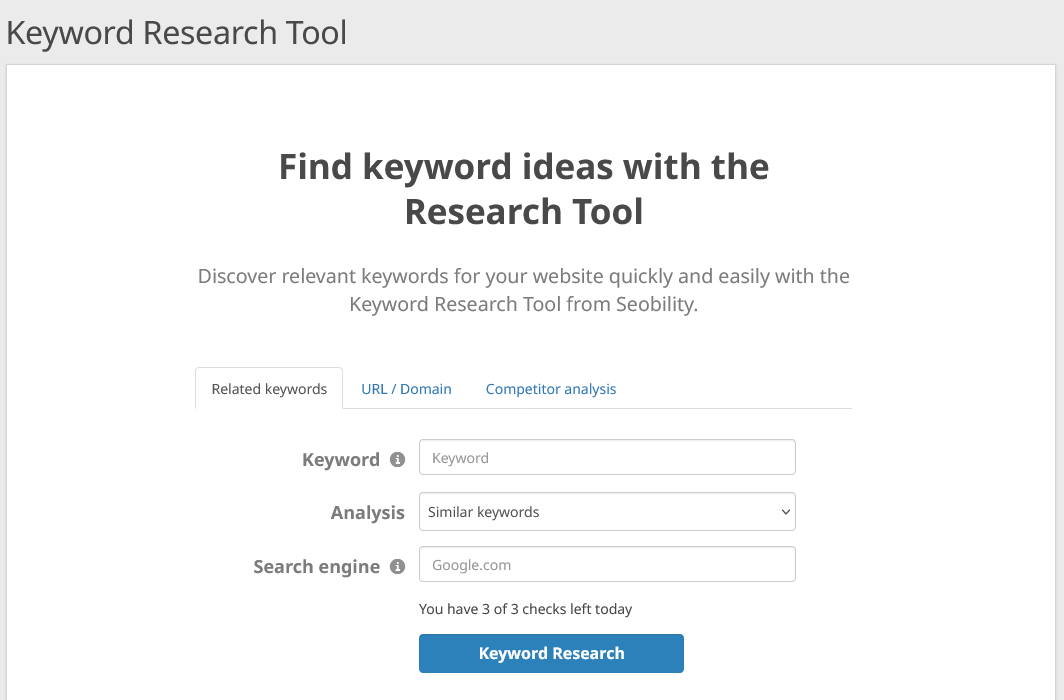
Handling these complex clusters needs tools that can handle huge datasets without oversimplifying the results. Modern platforms enable the ingestion of first-party data, such as customer support logs and internal site search inquiries, to refine the clusters. This develops a feedback loop where the search engine's data is supplemented by the real questions customers are asking an organization. This integration makes sure that the content method is grounded in reality instead of just theoretical search volume.
Statistical designs like Hidden Dirichlet Allowance (LDA) are utilized to reveal hidden subjects within a big body of text. In 2026, these designs are more available and much faster, permitting even little groups to perform deep analysis on their niche. By running these models against competitor content and search results page pages, online marketers can find "content gaps"-- topics within a cluster that no one else has actually dealt with effectively. Filling these gaps is the fastest way to construct authority in a crowded market.
Envisioning these clusters has also become a standard practice. Rather of spreadsheets, teams use three-dimensional maps that reveal the relationships between various topics. These maps make it easy to see which clusters are growing and which are losing significance. When a cluster begins to broaden, it often indicates a brand-new trend that can be profited from before it reaches the mainstream. This proactive approach is what separates leaders from fans in the current search environment.
The Future of Topical Authority
The goal of keyword clustering is no longer just to rank for a specific term but to be seen as the definitive source for a broad subject. Online search engine in 2026 reward sites that reveal a deep understanding of a subject throughout all associated clusters. This is called topical authority, and it is the main chauffeur of natural development. A site that supplies skilled details on every aspect of a cluster is more most likely to rank for every single term within that cluster, even if the material is not completely enhanced for every individual word.
This shift has actually altered the method content is produced. Rather than composing 50 brief articles on 50 various keywords, the pattern is to create several "pillar" pieces that serve as the anchor for a cluster. These pillars are supported by smaller, more specific short articles that connect back to the primary topic. This internal linking structure mimics the method search engines group info, making it easier for spiders to understand the site's hierarchy and knowledge.
As we move through 2026, the dependence on automatic intent matching will just increase. Systems are progressing at determining the nuance between a user who is "just looking" and one who is "prepared to act." Effective techniques will be those that respect these differences and supply the best info at the best time. By concentrating on the logic of the cluster instead of the vanity of the keyword, businesses can construct a digital existence that is durable to the constant changes of the search environment.